Breaths Left with the Rain
Since first discovering the alveolus as a subject for my work in an unfamiliar country, I have recorded the new states of myself that I encounter away from familiar places. In periods when language, ways of living, and the rhythm of each day must be established anew, I always encounter a different breath.
During this residency in Belvès, I followed that breath a little further. Moving beyond observing my own state, I listened to the nature around me and the small sensations I could perceive within it.
During a conversation with a visitor to the exhibition, I heard about their experience of seeing actual alveoli while working as a nurse. They described alveoli not simply as spaces for breathing, but as places where oxygen and carbon dioxide are exchanged through a very thin layer of moisture on the surface. The small alveoli, connected like a bunch of grapes, each hold a thin film of water; when that balance is disturbed, breathing can no longer continue naturally. Breath, I felt, flows most comfortably when it holds just enough water.
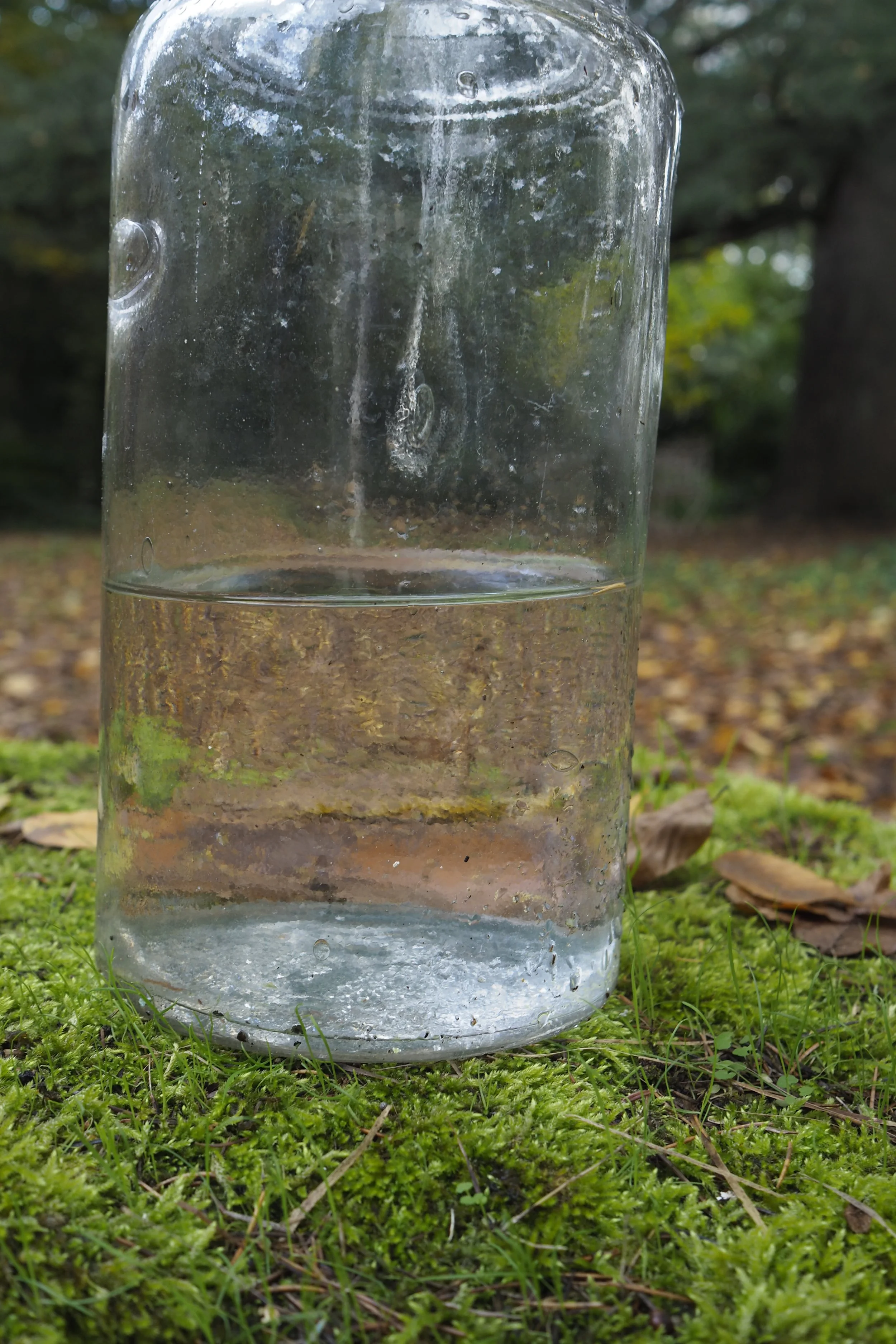
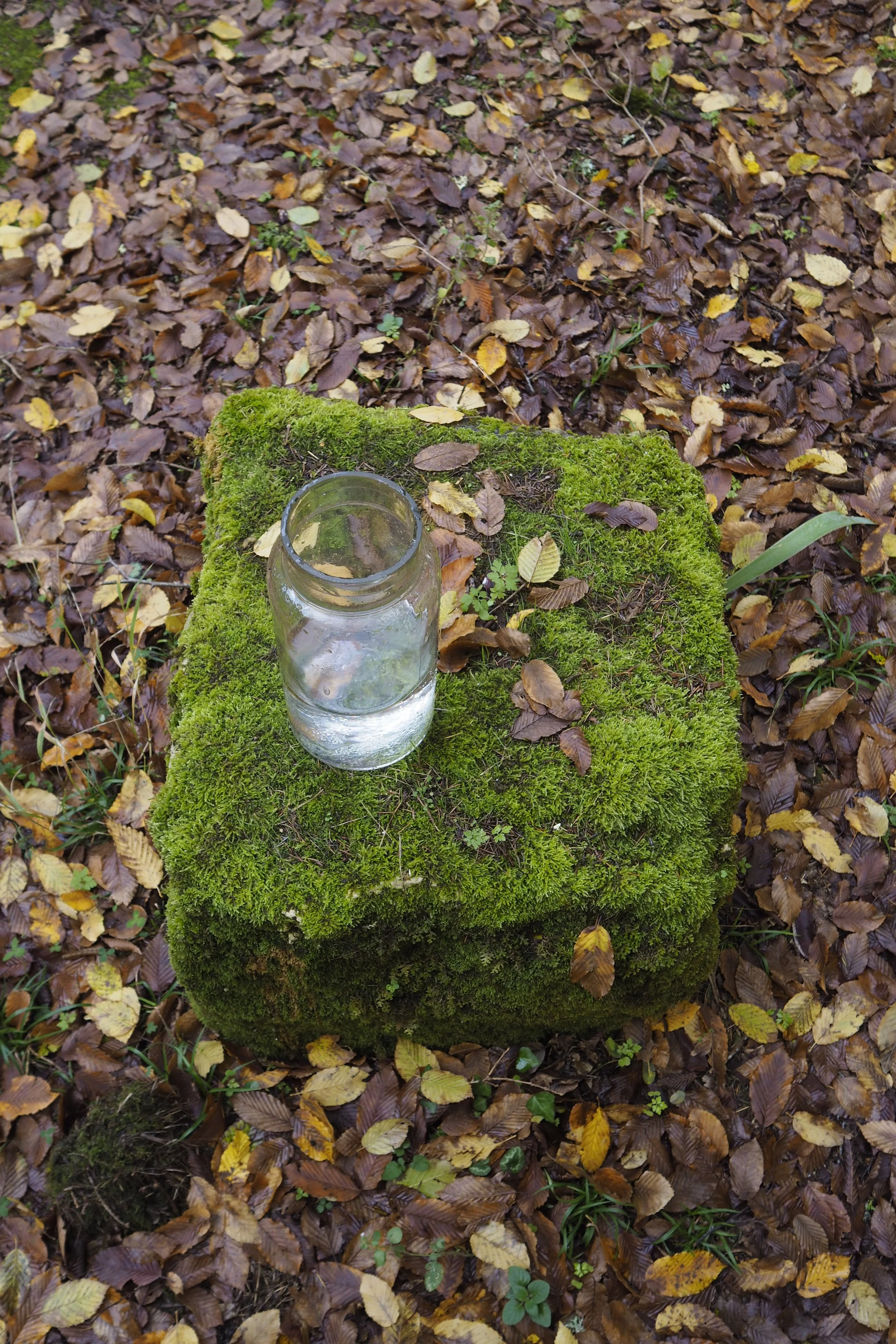
While staying in Belvès, I collected autumn rain that had fallen overnight in a glass jar and used it in my work.
Water that had passed through the air of that place met pigment, slowly soaking into the paper, spreading, and lingering. As the amount of water increased, forms blurred and boundaries disappeared. With less water, lines became clearer and forms more distinct.
The work was, in the end, a process of water and pigment finding their appropriate places. Perhaps it also resembled the process of breath finding its own place.
Each day, I too remained somewhere between the two. Neither too little nor too much. Watching over my own centre, as subtle and important as the thin layer of moisture on the surface of an alveolus, almost too small to see.
These are the breaths I left with the rain of that place.
-
작업의 주제로서 낯선 타국에서 처음 ‘폐포’를 발견한 이후, 나는 익숙한 곳이 아닌 장소에서 마주하는 새로운 나의 상태를 기록했다. 언어도, 생활 방식도, 하루의 리듬도 다시 세워야 하는 시간 속에서, 나는 늘 이전과는 다른 호흡을 마주하게 된다.
이번 Belvès 레지던시에서는 그 호흡을 조금 더 멀리 따라가 보았다. 나의 상태를 관찰하는 것에서 한 걸음 더 나아가, 나를 둘러싼 자연과 그 안에서 감지되는 작은 감각들에 귀 기울였다.
전시장에 찾아온 한 관람객과 이야기를 나누던 중, 간호사로 일하며 실제 폐포를 보았다는 이야기를 들었다. 폐포는 단순히 숨을 쉬는 공간이 아니라, 표면의 아주 얇은 수분층을 통해 산소와 이산화탄소를 교환한다는 것. 포도송이처럼 이어진 작은 폐포들은 각각의 표면에 얇은 물의 막을 품고 있으며, 그 균형이 무너지면 호흡 또한 자연스럽게 이어지지 못한다. 결국 숨은 적당한 물을 품고 있을 때 가장 편안하게 흐른다.
Belvès에 머무는 동안 나는 밤새 내린 가을비를 유리병에 모아 작업에 사용했다.
그곳의 공기를 지나온 물은 안료와 만나 종이 위에 천천히 스며들고, 번지고, 머문다. 물의 양이 많아질수록 형태는 흐려지고 경계는 사라지며, 반대로 물이 적어질수록 선은 또렷해지고 형태는 선명해진다.
작업은 결국 물과 안료가 적당한 자리를 찾아가는 과정이었고, 어쩌면 그것은 호흡이 제자리를 찾아가는 과정과도 닮아 있었다.
매일의 나 또한 그 사이 어딘가에 머물렀다. 너무 적지도, 너무 넘치지도 않게. 폐포 표면의 얇은 수분층처럼, 눈에 보이지 않을 만큼 미세하지만 중요한 나의 중심을 지켜보며.
그렇게 그곳의 빗물과 함께 남겨진 나의 호흡들.